

 Deutsch
 English
 Italiano





Aluminum in 3D Printing: AlSi10Mg for Lightweight, Strong Parts
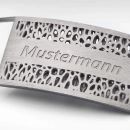
In metal 3D printing, aluminum is mainly processed as the alloy AlSi10Mg by selective laser melting (SLM). With a density of 2.67 g/cm³, it weighs only around a third as much as stainless steel and achieves a tensile strength of 410 ± 20 MPa as built. This makes it suitable for lightweight parts, prototypes, small batches and heat exchangers.
On the PROTIQ Marketplace, you upload your 3D data, choose aluminum and compare the offers – PROTIQ is itself one of the manufacturers. For design parts, there is also the composite material Alumide made of PA12 and aluminum powder.
- 2.67 g/cm³density of AlSi10Mg – stainless steel 1.4540: 7.7 g/cm³
- 410 ± 20 MPatensile strength as built
- 103 ± 5 W/(m·K)thermal conductivity
- 120 HBWhardness as built
Material
What makes aluminum and AlSi10Mg special?
Aluminum is the most abundant metal in the Earth's crust and a classic light metal: lightweight, corrosion-resistant, a good heat conductor and highly recyclable. AlSi10Mg is a proven aluminum casting alloy with around 10% silicon and a small amount of magnesium – and one of the most widely used aluminum alloys in metal 3D printing.
- Low weight: At 2.67 g/cm³, AlSi10Mg is significantly lighter than steel, titanium or copper.
- Good mechanical properties: Tensile strength of 410 ± 20 MPa as built, 340 ± 20 MPa after heat treatment with slightly higher elongation at break.
- Good heat conduction: 103 ± 5 W/(m·K) – suitable for lightweight heat sinks and heat exchangers.
- Adjustable by heat treatment: Mechanical properties can be set specifically depending on the requirements.
Properties
What are the material properties of 3D-printed AlSi10Mg?
According to the PROTIQ data sheet, laser-melted AlSi10Mg achieves a tensile strength of 410 ± 20 MPa and a yield strength of 250 ± 20 MPa as built, with a density of 2.67 g/cm³ and a thermal conductivity of 103 ± 5 W/(m·K).
| Property | As built | After heat treatment |
|---|---|---|
| Tensile strength | 410 ± 20 MPa | 340 ± 20 MPa |
| Yield strength Rp0.2 | 250 ± 20 MPa | 220 ± 10 MPa |
| Elongation at break | 6 ± 2% | 7 ± 2% |
| Hardness | 120 HBW | – |
| Density | 2.67 g/cm³ | |
| Thermal conductivity | 103 ± 5 W/(m·K) | |
Values according to AlSi10Mg material data sheet, laser-melted.
↑ Back to overview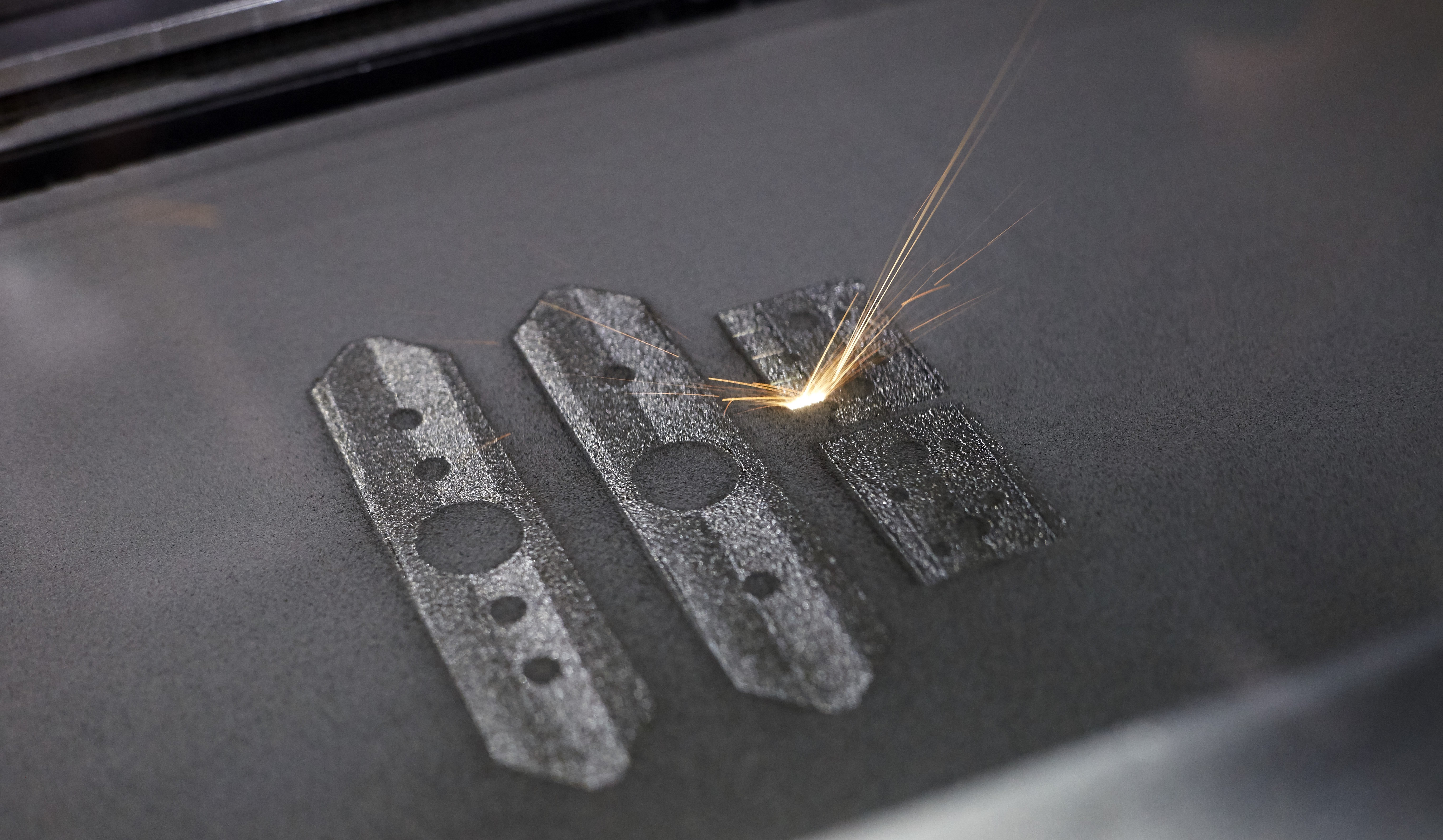
SLM process
How is aluminum 3D printed?
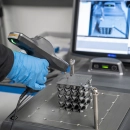
Aluminum parts are produced by selective laser melting (SLM): the machine applies metal powder layer by layer, and a laser selectively melts it where the part is created – directly from the CAD data and without casting molds.
Benefits of aluminum in the SLM process
- Weight reduction through topology-optimized and bionically inspired structures
- Function integration: several individual parts in one component
- Fast and cost-efficient prototypes
- Small batches without tooling costs
How selective laser melting works
↑ Back to overviewDesign & post-processing
What should I consider for 3D-printed aluminum parts?
Walls should be at least 0.6 mm thick, and the accuracy is ± 0.7% (at least 0.1 mm). After sandblasting, the surface has a roughness of Ra 7–10 µm; functional surfaces can be machined.
| Guideline value | AlSi10Mg |
|---|---|
| Minimum wall thickness | 0.6 mm |
| Accuracy | ± 0.7% (min. 0.1 mm) |
| Roughness after sandblasting | Ra 7–10 µm, Rz 50–60 µm |
Guideline values. The values actually achievable depend on the geometry.
Post-processing
3D-printed aluminum parts can be machined well – for example by milling, drilling, thread cutting or grinding. Blasting and polishing are also possible. When anodizing, the silicon content of AlSi10Mg affects the color appearance; please talk to us about this in advance.
↑ Back to overviewApplications
What is aluminum used for in 3D printing?
Typical uses are functional prototypes, small batches with complex geometries, lightweight parts for mechanical engineering and robotics, as well as heat exchangers and heat sinks.
Prototyping
Aluminum is light, strong and easy to machine – ideal for functional samples, assembly tests and test series. More about prototyping
Small batches
Alongside die casting and CNC milling, 3D printing is also becoming more important for series production – especially for small quantities, complex geometries and integrated functions that could not be produced conventionally.
Lightweight design
Thanks to its good strength-to-weight ratio, aluminum is suitable for lightweight parts in mechanical and plant engineering, robotics and automation, for fixtures and grippers – and as a material that also plays an important role in aerospace.
Heat exchangers and heat sinks
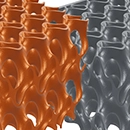
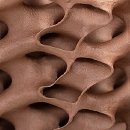
Lightweight heat exchangers with gyroid or lattice structures make use of good heat conduction at low weight. More about heat exchangers
↑ Back to overview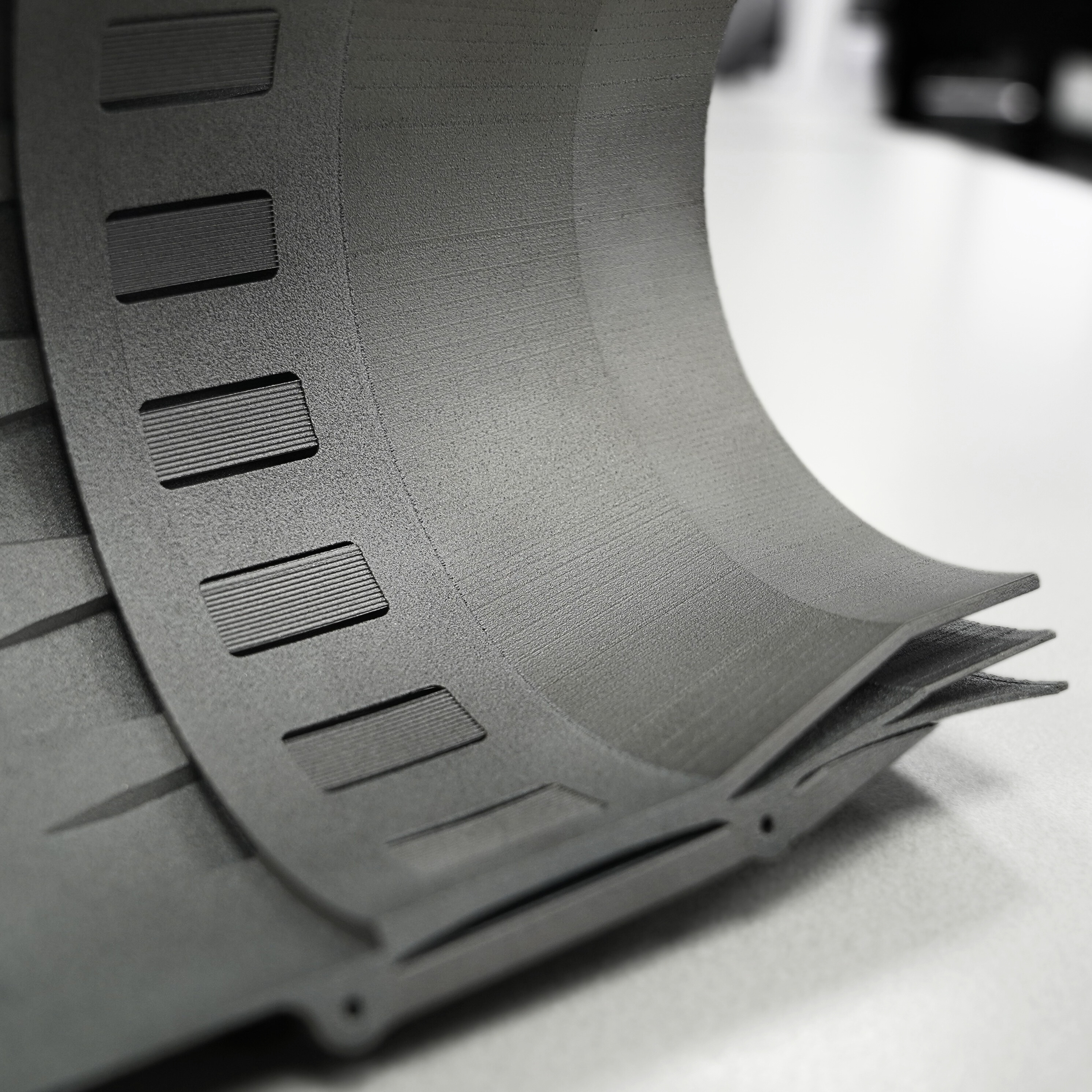
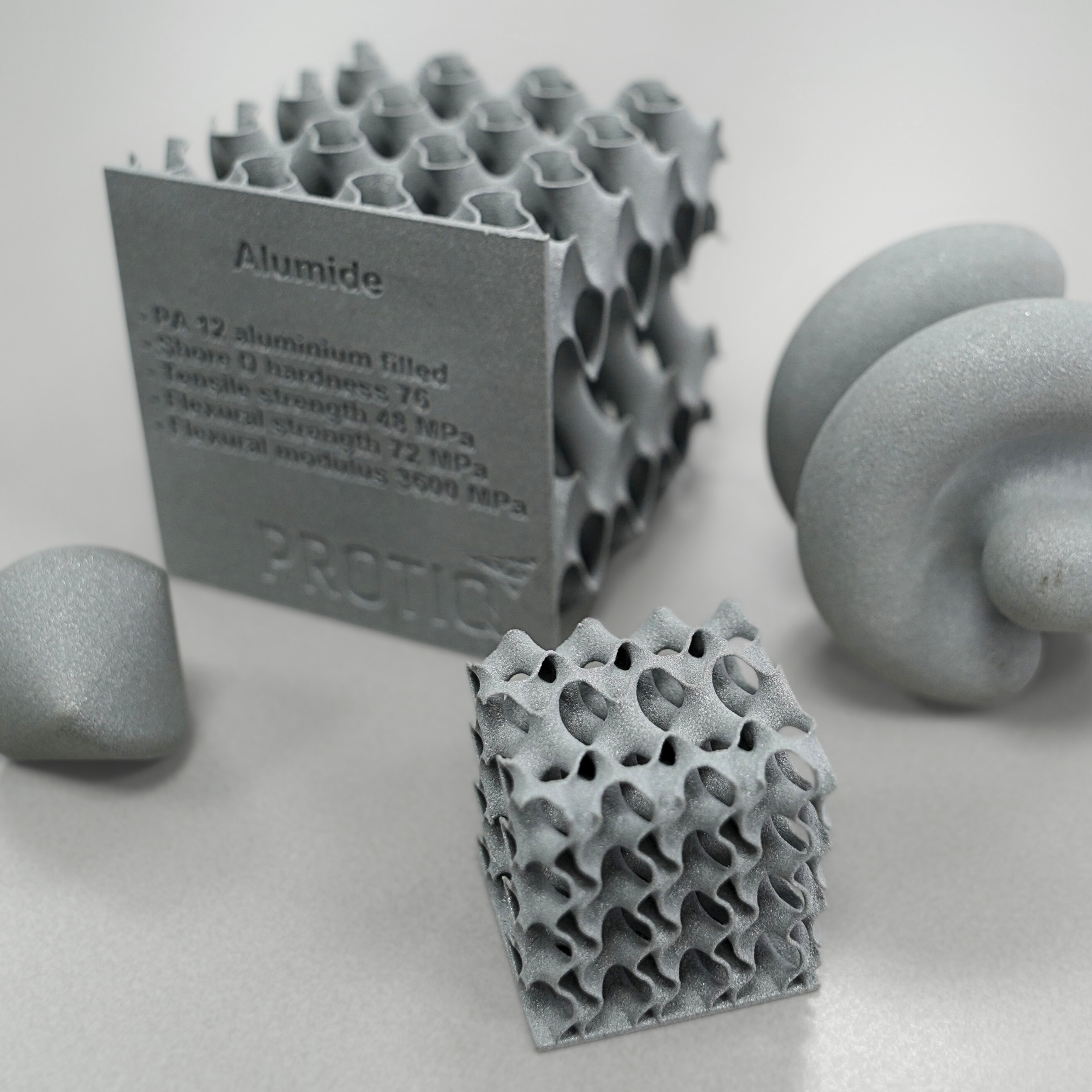
Alumide
What is Alumide?
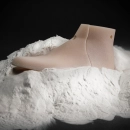
Alumide is a composite material made of PA12 and fine aluminum powder that is processed by selective laser sintering (SLS). The parts have a gray metallic surface, higher stiffness than pure PA12 and are produced without support structures.
- High stiffness and dimensional stability
- Gray metallic, slightly grainy surface
- Very easy to post-process – sanding, polishing, dyeing
- Complex geometries without support structures
- Ideal for design parts and small batches
Alumide is not a metal: for strong aluminum parts, AlSi10Mg from the SLM process is the right choice. Choose Alumide in the configurator or request it from us.
↑ Back to overview3D data available
Order an aluminum part
Upload your CAD data, choose AlSi10Mg and compare the offers with price and delivery time.
Upload file nowIdea or project
Discuss your project
Do you have an idea or a specific project? We will be happy to advise you on design, material and post-processing.
Start project requestCompare materials
All metals
Stainless steel, titanium, copper, tool steel and other metals for 3D printing at a glance.
To the metals overviewFAQ
Frequently asked questions about aluminum in 3D printing
Which aluminum alloy is used in 3D printing?
Metal 3D printing mainly uses AlSi10Mg, an aluminum casting alloy with around 10% silicon and a small amount of magnesium. It can be processed well by selective laser melting (SLM).
How strong is 3D-printed aluminum?
According to the PROTIQ data sheet, laser-melted AlSi10Mg achieves a tensile strength of 410 ± 20 MPa as built and 340 ± 20 MPa after heat treatment. The yield strength is 250 ± 20 MPa and 220 ± 10 MPa respectively.
How light is aluminum compared with steel?
AlSi10Mg has a density of 2.67 g/cm³ and therefore weighs only around a third as much as stainless steel 1.4540 at 7.7 g/cm³ (values according to PROTIQ data sheets).
Can 3D-printed aluminum parts be post-processed?
Yes. Aluminum parts can be machined well, for example by milling, drilling or grinding. Blasting and polishing are also possible. When anodizing, the silicon content of AlSi10Mg affects the color appearance – please talk to us about this in advance.
What is the difference between AlSi10Mg and Alumide?
AlSi10Mg is an aluminum alloy that is processed into metal parts by selective laser melting. Alumide is a composite material made of PA12 and aluminum powder that is processed by selective laser sintering – a plastic with a metallic look, mainly for design parts.
Which CAD data formats are accepted?
The PROTIQ Marketplace processes all common 3D formats, including STL, STEP, IGES, OBJ, 3DM, Parasolid, SolidWorks and CATIA.
Are there minimum or maximum part sizes?
Yes. The maximum part size depends on the process and the build chamber of the machine. During the ordering process, you can see directly whether your part fits into the respective build chamber. For AlSi10Mg, the PROTIQ data sheet specifies a minimum wall thickness of 0.6 mm.
How does ordering via the PROTIQ Marketplace work?
Upload your CAD file, choose the material, quantity and manufacturing process, compare the offers with price and delivery time and select one. After ordering, the selected manufacturer produces your part.
Are 3D-printed aluminum parts suitable for series production?
Yes, especially for small batches. There are no tooling costs, adjustments are possible without set-up times, and 3D printing is a good complement to die casting for iterative or custom designs.
↑ Back to overview