


 Deutsch
 English
 Italiano









3D Printing for Data Centers: More Efficient Cooling and Fast Availability of Components
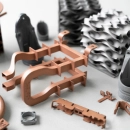
Rising power densities driven by AI and high-performance computing make cooling the central task in the data center. 3D printing enables cold plates, heat sinks and heat exchangers with freeform cooling channels that can hardly be produced conventionally – especially in copper. PROTIQ has been 3D printing copper since 2013 and today manufactures pure copper parts with an electrical conductivity of 57 MS/m.
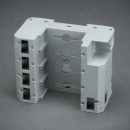
3D printing also produces busbars for power distribution, air ducts, brackets and housing parts as well as spare parts that are no longer available. On the PROTIQ Marketplace, you can choose from more than 160 materials from more than 40 providers – PROTIQ is one of them.
- since 2013PROTIQ has been 3D printing copper
- 57 MS/melectrical conductivity of pure copper
- 415 ± 10 W/(m·K)thermal conductivity of pure copper
- 160+ materialsfrom more than 40 providers on the PROTIQ Marketplace
Challenges
What challenges do modern data centers face?
Cloud services, AI and high-performance computing (HPC) are driving rapid growth in data centers. Processors, GPUs and AI accelerators generate more and more heat in less and less space – and a considerable share of energy consumption is already spent on cooling.
- Cooling: Conventional air cooling reaches its limits at high power densities. Liquid cooling, direct liquid cooling (DLC) and immersion cooling are gaining importance – and with them components that transfer heat to the coolant in a targeted way.
- Energy efficiency: Besides cooling performance, the pressure drop in the cooling circuit matters. The higher it is, the more energy the pumps need.
- Power distribution: GPU clusters and AI applications require reliable power distribution with rising power densities and limited installation space.
- Availability: Systems often run for many years. Individual brackets, housing parts or functional parts are then frequently no longer available.

Cooling
How does 3D printing improve cooling in the data center?
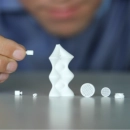
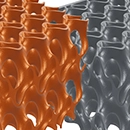
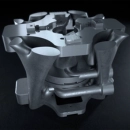
3D printing allows cooling geometries that can hardly be produced by milling or drilling: branched cooling channels, lattice and gyroid structures or topology-optimized cooling surfaces. This makes it possible to guide the coolant precisely to the areas with the highest heat generation and to enlarge the surface area for heat transfer.
Cold plates for liquid cooling
Cold plates absorb heat directly from processors, GPUs or other electronic components and transfer it to the coolant. In 3D printing, the cooling channels are integrated directly into the plate – freely shaped instead of drilled straight. The aim is to dissipate heat as efficiently as possible while keeping flow resistance low, because a lower pressure drop reduces the energy required by the pumps.
Heat sinks
Heat sinks dissipate heat in servers, storage and network systems. Fine lattice structures, complex fins or organically optimized cooling surfaces enlarge the surface area and can thus improve heat exchange – especially in combination with highly thermally conductive copper.
Heat exchangers
3D printing allows flow channels and internal structures to be designed specifically for uniform heat transfer and low pressure drop. The result is compact heat exchangers that require less installation space for comparable performance.
Benefits of 3D-printed cold plates and heat sinks
- Freeform cooling channels instead of straight bores
- Flow guided precisely to the hotspots
- More cooling surface in the same installation space
- Designed for low pressure drop
- Several functions in one part, fewer joints
- Complex geometries made of pure copper
Air flow and thermal management
3D printing also contributes to efficiency in air-cooled areas: air ducts, flow guides and components for rack management can be adapted to existing racks and housings, air flows can be directed precisely and several functions can be combined in one part.
↑ Back to overviewComponents & materials
Which data center components can be 3D printed?
Typical examples are cold plates, heat sinks, heat exchangers and manifolds for liquid cooling, busbars, air ducts, brackets, housing parts and spare parts. Copper is the most important material for cooling and current conduction, while plastics are mostly used for infrastructure parts.
| Component | What 3D printing enables | Materials (examples) |
|---|---|---|
| Cold plates | Freeform cooling channels directly at the hotspots, lattice or gyroid structures | Pure copper, pure copper low-O₂ |
| Heat sinks | Lattice structures, complex fins, organically optimized cooling surfaces | Pure copper, aluminum |
| Heat exchangers | Flow guidance for uniform heat transfer and low pressure drop, compact design | Copper, aluminum |
| Manifolds for liquid cooling | Integrated channels, fewer connection points | Metal or plastic – depending on the medium and requirements |
| Busbars and connecting elements | Geometry adapted to the available installation space, function integration | Pure copper |
| Air ducts and flow guides | Adapted to racks and housings, several functions in one part | Plastics such as PA12 |
| Brackets, cable management, housing parts | Integrated cable guides, cost-effective even in small quantities | Plastics such as PA12 or electrically dissipative PA11 ESD |
| Spare parts | Reproduction of discontinued parts based on CAD data | Depending on the part and requirements |
Which material is suitable depends on your application. You choose it in the configurator – or request it from us. If special requirements apply, for example regarding fire protection, we will be happy to clarify with you which materials are suitable.
↑ Back to overview
Copper
Why is copper the most important material for data center cooling?
Copper conducts heat and electricity better than almost any other technical metal. In 3D printing, however, it is one of the most demanding materials because it reflects a large share of the laser energy and dissipates heat very quickly. PROTIQ has been working on this since 2013 and produces pure copper parts in-house.
According to the data sheet, additively manufactured pure copper from PROTIQ achieves an electrical conductivity of 57 MS/m and a thermal conductivity of 415 ± 10 W/(m·K). For parts that require particularly high purity, there is pure copper low-O₂: a coordinated material, process and post-treatment strategy keeps oxygen pick-up as low as possible along the entire process chain – of interest wherever conductivity directly determines performance, for example in electronics cooling.
More about copper in 3D printing
↑ Back to overviewPower distribution
Can busbars and power distributors be 3D printed?
Yes. 3D printing produces copper busbars, power distributors and electrical connecting elements that are precisely adapted to the available installation space – particularly useful for complex geometries, prototypes, small batches and special infrastructure projects.
AI applications, high-performance computers and GPU clusters need reliable power distribution with rising power densities. The design freedom of 3D printing allows conductor geometries and integrated functions that can only be achieved to a limited extent with conventional processes. Pure copper provides the high electrical conductivity that current-carrying parts need.
↑ Back to overview
Spare parts & infrastructure
How does 3D printing help with spare parts and infrastructure components?
3D printing reproduces parts on demand and without minimum order quantities – including discontinued brackets, housing parts or functional parts. Instead of keeping spare parts in stock for years, you only store the CAD data and reorder when needed.
Custom infrastructure and functional components
Brackets with integrated cable guides, flow guides or ready-to-install assemblies can be developed specifically for existing rack systems, server housings and technical infrastructure – without expensive tooling. This reduces the number of parts, assembly effort and inventory, and is particularly helpful for modernizations, expansions and special applications.
Digital inventory with the PROTIQ Marketplace
In your customer account on the PROTIQ Marketplace, you store your projects and 3D models and build your digital spare parts inventory. You can reorder the parts you need with just a few clicks. This shortens response times, lowers storage costs and makes it easier to keep critical components available in the long term.
More about 3D-printed spare parts
↑ Back to overviewProcess
How does a data center project with PROTIQ work?
From the initial idea and component optimization to manufacturing and reordering: you decide whether to order directly online or discuss your project with us.
-
Step 1
Request or fileUpload your 3D data in the configurator or describe your part to us – even if it is still just an idea. -
Step 2
Optimize the partOn request, we support you with design for manufacturing, for example regarding cooling channels, wall thicknesses or function integration. -
Step 3
Choose material and offerYou choose the material, quantity and the right offer – PROTIQ is itself one of the manufacturers on the Marketplace. -
Step 4
Manufacture and reorderYour part is manufactured. The data remains in your customer account so you can reorder at any time.
3D printing does not replace all conventional manufacturing processes. It is a powerful addition wherever complex geometries, high power densities, short delivery times or custom solutions are required. As part of the Phoenix Contact Group, PROTIQ helps you make targeted use of this potential.
Custom solutions for data centers
Are you planning a cooling component, copper part, busbar, infrastructure component, or spare part for your data center? We support you throughout the entire process, from the initial concept and design optimization to additive manufacturing. Whether you need a prototype, a replacement part, or a production-ready component, we help you develop solutions tailored to your technical requirements, performance goals, and installation constraints.

FAQ
Frequently asked questions about 3D printing for data centers
How can 3D printing improve data center cooling?
3D printing enables heat sinks, heat exchangers and cold plates with complex geometries and integrated cooling channels. This allows parts to be adapted precisely to the installation space, heat source and coolant – especially for liquid cooling and high-performance applications.
What are cold plates?
Cold plates are cooling plates that absorb heat directly from processors, GPUs or other electronic components and transfer it to a coolant. With 3D printing, cooling channels and flow guidance can be adapted individually to the requirements.
Why is copper used for data center cooling?
Copper has a very high thermal conductivity and is therefore particularly suitable for heat sinks, heat exchangers and cold plates. According to the data sheet, additively manufactured pure copper from PROTIQ achieves 415 ± 10 W/(m·K). 3D printing adds complex cooling structures and internal channels.
What is pure copper low-O₂?
Pure copper low-O₂ is a particularly low-oxygen variant of pure copper for parts that require particularly high purity. PROTIQ keeps oxygen pick-up as low as possible along the entire process chain – from the powder through storage and handling to the printing process.
Is additive manufacturing suitable for liquid cooling and direct liquid cooling?
Yes. Additive manufacturing is increasingly used for liquid cooling components, especially cold plates, heat exchangers, manifolds and parts with integrated cooling channels. The technology offers great design freedom with a compact design.
Which data center components can be 3D printed?
Typical examples are heat sinks, heat exchangers, cold plates, manifolds, air duct elements, busbars, brackets, housing parts and spare parts. 3D printing is particularly interesting for custom parts, complex geometries and smaller quantities.
Can busbars and power distributors be manufactured additively?
Yes. 3D printing produces custom busbars and electrical connecting elements made of copper. This offers advantages for complex geometries, limited installation space or special infrastructure projects.
What does digital inventory mean?
With digital inventory, parts are stored as CAD data and reproduced when needed. On the PROTIQ Marketplace, you store your projects and 3D models in your customer account and reorder the parts you need with just a few clicks.
How does PROTIQ support data center projects?
PROTIQ supports you from component development and advice on material selection through to manufacturing and reordering. The focus is on cooling components and copper parts, busbars as well as custom infrastructure components and spare parts.
↑ Back to overview