

 Deutsch
 English
 Italiano





Brass in 3D Printing
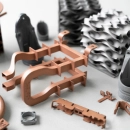
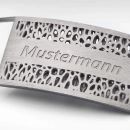
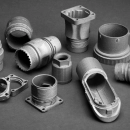
Brass is a copper-zinc alloy with a gold-like color, good corrosion resistance and good machinability. PROTIQ is currently the only provider worldwide that manufactures brass by selective laser melting (SLM) – as RS brass, with a tensile strength of 310 ± 30 MPa and an electrical conductivity of 8 MS/m according to the data sheet. Typical parts include connecting and terminal elements, prototypes and decorative parts.
Upload your 3D data to the PROTIQ Marketplace, choose brass and see the price and delivery time right away – your part is manufactured by PROTIQ.
- 310 ± 30 MPatensile strength of RS brass (as built)
- 8 MS/melectrical conductivity of RS brass
- 8.2–8.6 g/cm³density of RS brass
- 0.6 mmminimum wall thickness
Material
What is brass?
Brass is an alloy of copper and zinc. Depending on the grade, the zinc content is between about 5 and 45 percent – it determines color, strength and processability. Brass is known for its gold-like color, its corrosion resistance and its good machinability.
Brass has been used since antiquity – the Romans already made coins, jewelry and works of art from it. Today it is a classic material for fittings, valves and pipes, for connectors and contacts in the electrical industry, and for jewelry and crafts, because it is easy to shape and polish.
Properties
What properties does 3D-printed brass have?
According to the PROTIQ data sheet, RS brass produced by selective laser melting achieves a tensile strength of 310 ± 30 MPa, a yield strength of 260 ± 10 MPa and an elongation at break of 8 ± 3% – with a density of 8.2–8.6 g/cm³ and an electrical conductivity of 8 MS/m.
| Property | RS brass |
|---|---|
| Tensile strength | 310 ± 30 MPa |
| Yield strength Rp0.2 | 260 ± 10 MPa |
| Elongation at break | 8 ± 3% |
| Modulus of elasticity | 80 ± 5 GPa |
| Electrical conductivity (edge / core) | 8 / 8 MS/m |
| Density | 8.2–8.6 g/cm³ |
| Minimum wall thickness | 0.6 mm |
| Accuracy | ± 0.7% (min. 0.1 mm) |
| Roughness after sandblasting | Ra 7–9 µm, Rz 40–50 µm |
Values according to the PROTIQ RS brass material data sheet, laser-melted; mechanical properties as built.
Process
How is brass 3D printed?
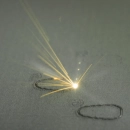
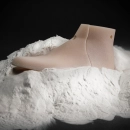
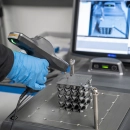
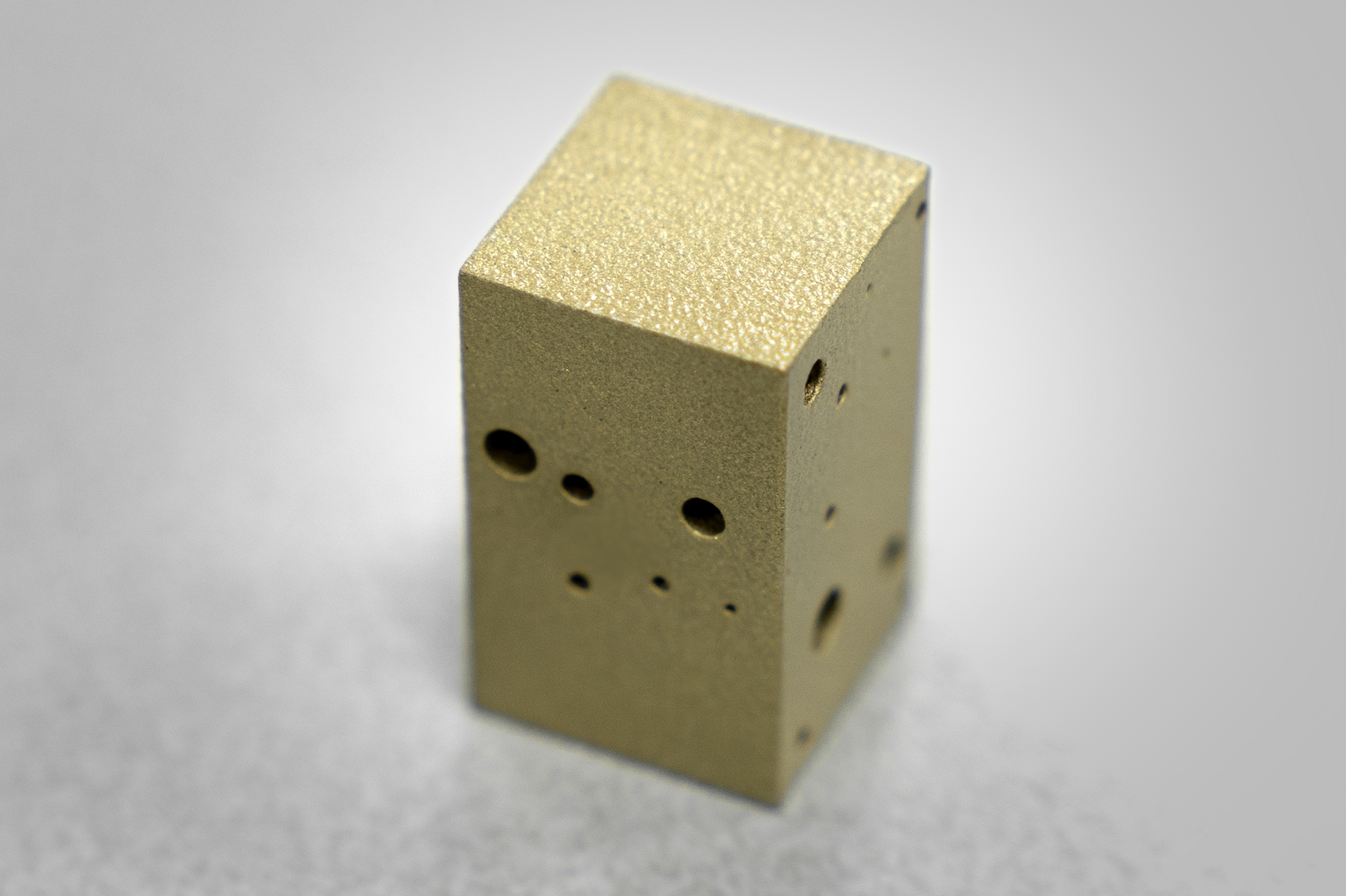
Brass parts are produced by selective laser melting (SLM): a laser selectively melts metal powder layer by layer, so that complex parts are created directly from the CAD data – without molds or tooling.
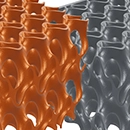
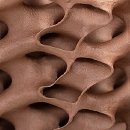
- Complex geometries such as internal channels or gyroid structures
- Prototypes and small batches without tooling costs
- Several functions in one part
- Variants adapted quickly in the CAD model
How selective laser melting works
↑ Back to overviewApplications
What is 3D-printed brass used for?
For connecting and terminal elements, functional prototypes, parts for sanitary and pipe technology, and decorative parts where the gold-like look matters.
Connection and terminal technology
Brass is a proven material for connecting elements, terminals and contacts in electronics and electrical engineering.
Prototypes
Functional brass samples are produced quickly and precisely – ideal for testing parts before series production.
Sanitary and pipe technology
Thanks to its corrosion resistance, brass is a classic material in sanitary and pipe technology, for example for fittings.
Design and decoration
Its gold-like color makes brass attractive for design objects, jewelry and decorative parts.
Post-processing
How can 3D-printed brass parts be post-processed?
After sandblasting, the roughness is Ra 7–9 µm according to the PROTIQ data sheet. Brass can be ground and polished well – right up to a shiny, smooth surface. Functional surfaces can be machined.
- Polishing: for a shiny surface and the typical brass look
- Grinding and blasting: for even, matte surfaces
- Machining: for fits and tightly toleranced functional surfaces
Anodizing is a process for aluminum and is not suitable for brass.
↑ Back to overview3D data available
Order a brass part
Upload your CAD data, choose brass and see the price and delivery time right away.
Order your brass parts nowIdea or project
Discuss your project
Do you have an idea or a specific project? We will be happy to advise you on design, material and post-processing.
Start project requestMore materials
All metals
Copper, aluminum, steel and other metals for 3D printing at a glance.
To the metals overviewFAQ
Frequently asked questions about 3D printing with brass
Who manufactures brass by SLM 3D printing?
PROTIQ is currently the only provider worldwide that manufactures brass by selective laser melting (SLM). The material is called RS brass; you can find its properties in the PROTIQ data sheet.
What is brass in 3D printing?
Brass is a copper-zinc alloy. In 3D printing, it is processed by selective laser melting (SLM) – at PROTIQ as RS brass. It combines a gold-like look with good corrosion resistance and electrical conductivity.
What are the properties of 3D-printed brass?
According to the PROTIQ data sheet, RS brass achieves a tensile strength of 310 ± 30 MPa, a yield strength of 260 ± 10 MPa, an elongation at break of 8 ± 3% and an electrical conductivity of 8 MS/m at a density of 8.2–8.6 g/cm³.
Can 3D-printed brass withstand mechanical loads?
For moderate loads, yes. Steels are better suited for highly stressed structural parts.
Brass or copper – which is better?
That depends on the application. Brass stands out with its gold-like look and good machinability. If electrical or thermal conductivity is the top priority, pure copper is the better choice: according to the PROTIQ data sheets, it conducts much better at 57 MS/m than RS brass at 8 MS/m.
What applications is 3D-printed brass suitable for?
For connecting and terminal elements, contacts, functional prototypes, parts for sanitary and pipe technology, as well as design objects, jewelry and decorative parts.
What is the surface quality of 3D-printed brass like?
After sandblasting, the roughness is Ra 7–9 µm according to the PROTIQ data sheet. The surface can be ground and polished well to achieve a high-quality, smooth look.
Can brass be anodized?
No. Anodizing is a process for aluminum. Brass parts are instead polished, ground or blasted, for example.
How do I order a brass part?
Upload your 3D data in the configurator, choose brass and the quantity – you will see the price and delivery time right away. You can then order online.
↑ Back to overview